


NEXT PLAY
Next Play - A Parent's Guide to Mental Skills in Youth Sports
Next Play - A Parent's Guide to Mental Skills in Youth Sports
Parent created, research informed.
Over 100,000 people already use Nextplay to support the mental side of youth sport.
Explore the sports psychology behind the guideCouldn't load pickup availability
Help Your Child Find Their Next Play.
More confidence for the next challenge. A clearer response to mistakes. More useful support from you.
Created by a sports parent through professional consultations, published research, and experience with his own tennis-playing daughter and soccer-playing son.
Next Play brings those lessons together so you have a practical starting point when you want to help your child but are unsure what to say or do.
- Help your child refocus after a mistake.
- Support confidence when competition feels important.
- Make encouragement easier for your child to understand.
- Approach the sidelines and the ride home with a clearer plan.
- Support their development while protecting enjoyment and connection.
Explore the research behind the approach.
Ages 6–16 · Instant delivery to your email


THE RESEARCH BEHIND THE PRACTICE
PARENT-CREATED. INFORMED BY SPORTS PSYCHOLOGY.
Next Play grew out of a sports parent’s professional consultations, study of published research, and experience applying mental-skills tools with his own children. It brings those lessons into one practical guide, so another parent has a clear place to begin.
01
Self-talk with a purpose
A meta-analysis of 32 studies found an overall benefit of self-talk interventions for sport-task performance. Effects varied with the task and the kind of self-talk used.
Practical aim: help a child return attention to a useful task with words that feel believable to them.
Hatzigeorgiadis et al. (2011) · Perspectives on Psychological Science
Read the self-talk meta-analysis02
The parent’s role matters
Harwood and Knight’s research review and position paper describes age-appropriate support, managing parental emotions, and adapting involvement as important parts of sport parenting.
Practical aim: help a parent respond more calmly and offer support that fits the athlete.
Harwood & Knight (2015) · Psychology of Sport and Exercise
Read the sport-parenting paper03
Support the whole young athlete
The IOC youth-development consensus includes psychological and social development alongside sporting skills, with attention to individual needs and enjoyable, sustainable participation.
Practical aim: support confidence and learning in ways that fit the child’s age and wider life.
Bergeron et al. (2015) · British Journal of Sports Medicine
Read the youth-development consensusHELP THEM HANDLE THE MOMENTS THAT MATTER

Confidence on the court
Make the next point more manageable with a simple focus cue and a response to mistakes.

A next step on the field
Turn big ideas into short phrases and playful reminders a younger child can understand.
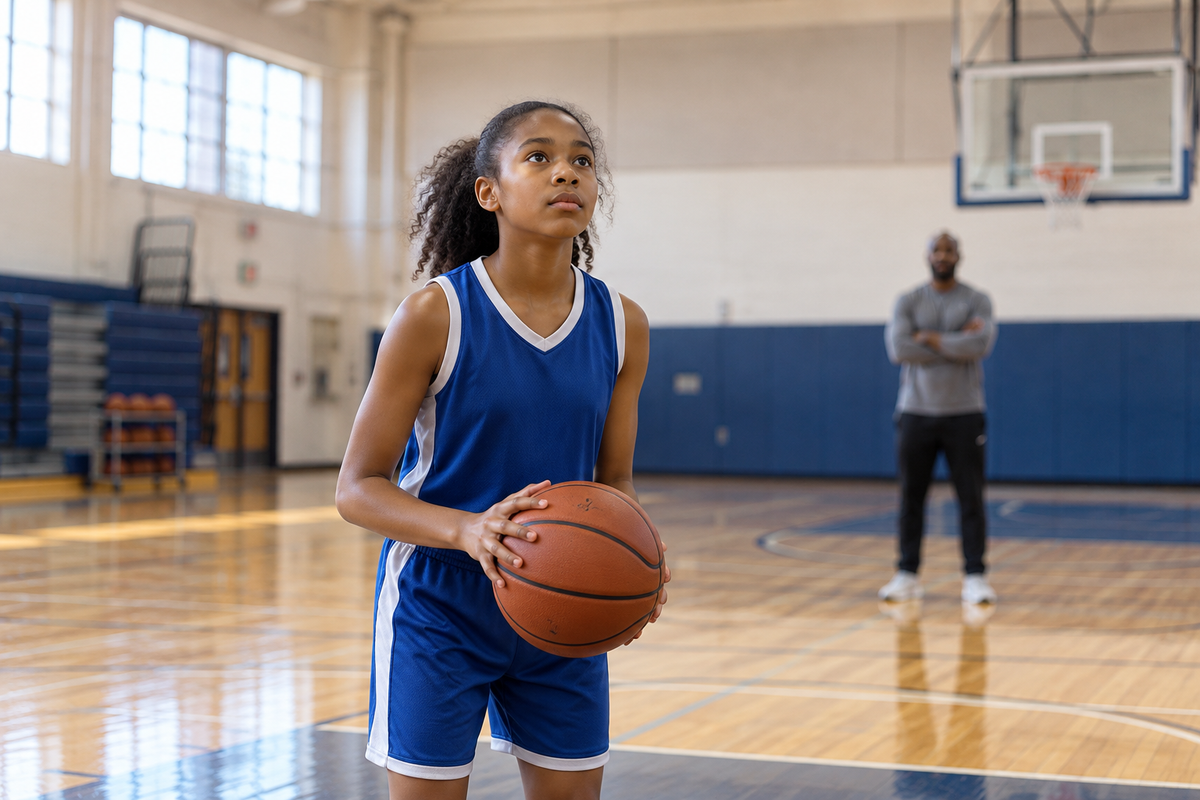
Focus in their own game
Help your athlete choose one useful task before a shot, a race, or a new challenge.
CREATED BY A PARENT WHO WANTED A BETTER WAY TO HELP
FROM FAMILY EXPERIENCE AND RESEARCH TO PRACTICAL SUPPORT
The creator sought sport-psychology support and studied published research because he wanted to help his own children with the mental demands of tennis and soccer.
He reports that applying the approach helped his family: his daughter moved from a junior ranking in the eighties to No. 20, while his son kept progressing in soccer.
Next Play brings those lessons together so another parent has a clearer place to begin. The family experience is the creator’s account; sporting results depend on many factors.
A CLEARER WAY TO HELP WHEN IT MATTERS
LESS GUESSING ABOUT YOUR ROLE. MORE USEFUL SUPPORT FOR THEIR NEXT PLAY.

Refocus after a mistake
Help your athlete bring attention back to the next useful action.
Feel more ready to compete
Support preparation and confidence when the moment feels important.
Make support easier to receive
Use encouragement that fits your child’s age and needs.
Bring more calm to the ride home
Approach the conversation with a clearer idea of what your child needs from you.
Help one mistake stay one moment
A double fault or missed shot can make the next point feel heavier.
Support your child in returning attention to what they can do next, rather than carrying the last mistake through the rest of the game.
For the creator’s tennis-playing daughter, mental preparation became part of the wider work behind her progress.
Encouragement a younger child can understand
For a six-year-old, the most useful support often begins with something small and clear.
Help your child find a manageable next step, stay involved in the game, and keep room for enjoyment.
The creator describes a clearer way to support his son as he keeps progressing in soccer.
Know how to stand beside them
When your child is disappointed, you want to help. A clearer approach can make it easier to decide when to listen, ask, encourage, or let a conversation wait.
Support their ambition while making your relationship feel steady through wins and losses.
Bring confidence into the next challenge
The benefit begins when a useful idea makes sense in your child’s own sporting world.
Help them approach the next attempt with a clearer task and a more believable inner voice. Give yourself a practical way to encourage that learning.
SUPPORT THAT GROWS WITH YOUR CHILD
Ages 6–9
Help a young child understand encouragement, recover from small setbacks, and keep enjoying participation.
Ages 10–12
Support growing confidence and the ability to make a useful choice when sport feels challenging.
Ages 13–16
Help your teenager take more ownership while keeping your support available and respectful.
YOUR QUESTIONS… ANSWERED
Is this for parents or for children?
It is created for parents of young athletes. The aim is to help you support confidence, focus, and responses to sporting challenges in ways your child can understand.
Which sports does it cover?
It can cover any sport. The tools focus on mental skills and parent support, with no technical or physical training program.
Is this a digital guide?
Yes. Next Play is delivered as a downloadable document. You can read it on your device. No physical item is shipped.
How much time do we need?
Begin with a situation that matters to your family and keep the practice manageable. Move at a pace that fits your child and your sporting schedule. Most parents see improvement in 10-30 days.
How is the guide delivered?
The download link is provided by email and through the order pages. No physical item is shipped.
HELP THEM FIND THEIR NEXT PLAY
Give your child a clearer way to face the next challenge, and yourself a clearer way to help.
A practical mental guide for sports parents. Ages 6–16.
Need help accessing your download? info@NextPlay.com.